Automated equipment is designed to repeat production tasks reliably, but that reliability depends on mechanical, electrical and control components continuing to work together. Preventive maintenance aims to find wear, contamination, loose connections and developing faults before they cause an unplanned stop. In a highly integrated line, one small failure can affect several upstream and downstream processes.
Mechanical items such as bearings, belts, chains, actuators, guides and tooling experience wear through normal operation. Lubrication, alignment and inspection schedules can identify changes before a component fails completely. The maintenance interval should reflect operating hours, load, environment and manufacturer recommendations rather than relying on a single schedule for every machine.
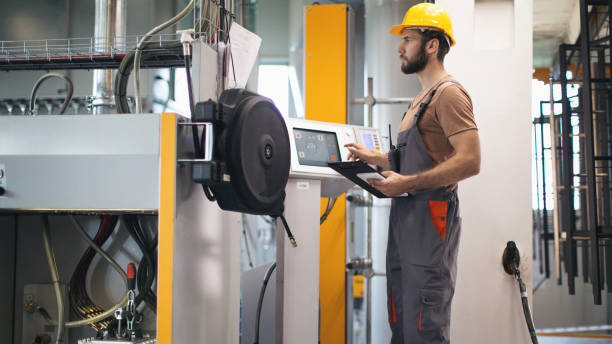
Electrical equipment also benefits from planned attention. Loose terminals, damaged cables, cooling fans, filters and enclosure seals can create intermittent faults or overheating if they deteriorate. Dust, heat, vibration and moisture can shorten component life. Routine inspection gives technicians a chance to correct these issues during a planned window instead of diagnosing them while production is waiting.
Control systems require a different kind of maintenance. PLC programs, robot programs, HMI projects, drive parameters and configuration files should be backed up and stored in a controlled location. When hardware fails, having a current backup can significantly reduce recovery time. Changes should be documented so the saved version actually matches the equipment running on the plant floor.
Alarm history and production data can support a more targeted maintenance approach. A motor that draws increasing current, a sensor that generates repeated intermittent faults or a robot that frequently reaches a torque warning may show deterioration before a complete breakdown. Reviewing trends allows maintenance teams to investigate patterns rather than waiting for a hard failure.
Safety devices must be included in the maintenance plan. Emergency stops, interlocks, light curtains, scanners and other safety-related components should be inspected and tested according to the applicable procedures. A production machine that still runs is not necessarily in acceptable condition if a protective function has been bypassed, damaged or allowed to degrade.
Planned maintenance also creates opportunities to improve housekeeping and accessibility. Clean panels are easier to inspect, labelled wiring is easier to fault-find and organised spare parts reduce delays. These details may seem minor until a breakdown occurs at night or during a busy production period, when clear documentation and accessible components become extremely valuable.
The goal is not to replace parts unnecessarily. A good program balances manufacturer guidance, site experience, condition data and the cost of downtime. Critical assets may justify more frequent inspection or condition monitoring, while less critical equipment can follow a simpler schedule. Priorities should reflect the consequence of failure as well as the likelihood of failure.
After each maintenance period, record what was found and what changed. Repeated observations can reveal components that need redesign, environmental problems that are shortening equipment life or tasks that are being performed too often. Preventive maintenance becomes more effective when the schedule evolves from real equipment history rather than remaining a static checklist.
Reliable automation depends on maintenance being treated as part of production planning rather than as a response to breakdowns. AKA Electrical & Automation works across industrial electrical and automation systems, helping businesses maintain, troubleshoot and improve equipment with safety, uptime and long-term supportability in mind.