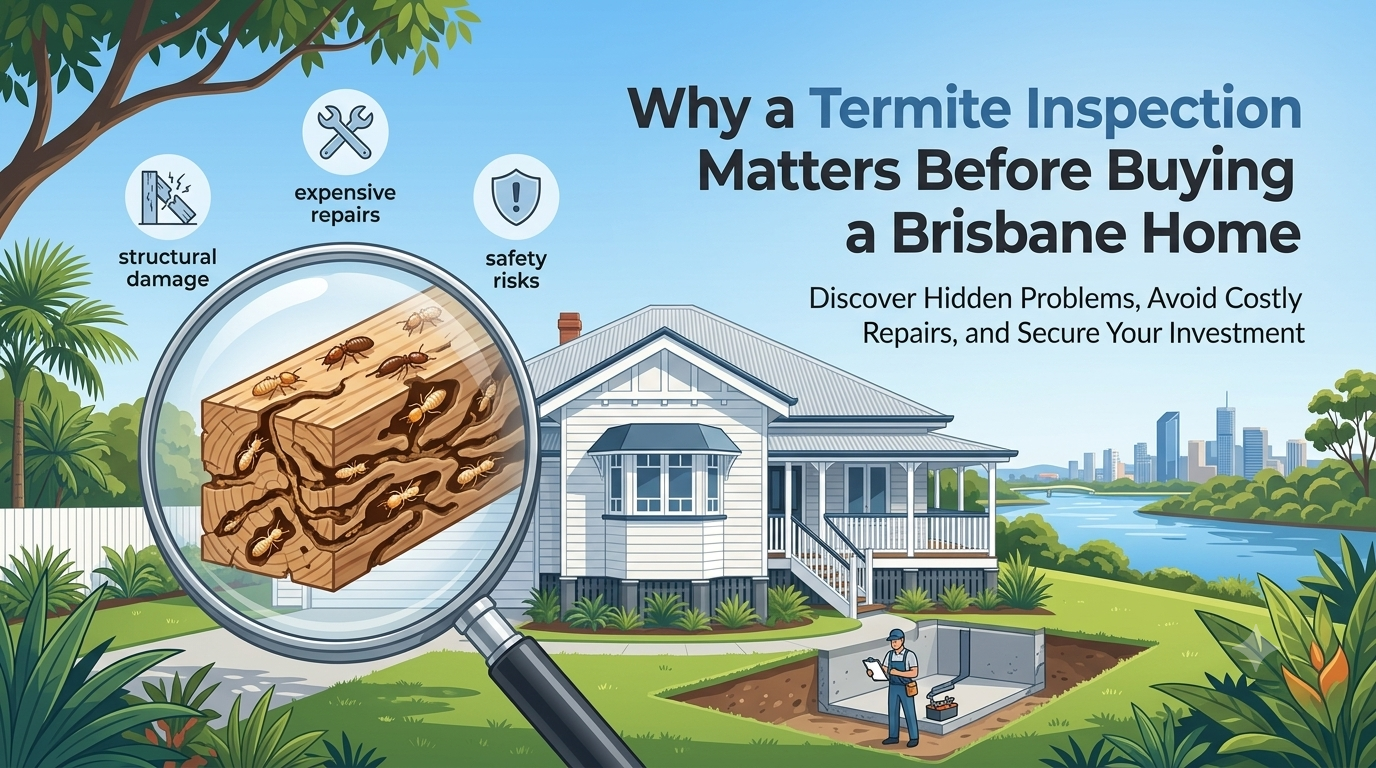
Buying a home is a major financial commitment, and visible presentation does not always reveal what is happening inside the structure. Fresh paint, renovated rooms and tidy landscaping can coexist with concealed termite activity or old termite damage. In Brisbane, a separate termite assessment can provide valuable information before a buyer becomes responsible for the property.
A standard viewing is not enough
Property inspections during an open home are usually brief and competitive. Buyers may focus on room sizes, finishes, location and price while overlooking subtle signs such as uneven timber, mud shelter tubes or restricted inspection areas. Termites often travel through concealed spaces, so the absence of visible insects does not confirm that a property is clear.
Active termites and previous damage are different issues
An inspection may identify current activity, evidence of previous treatment, old damage or conditions that increase future risk. These findings do not all have the same meaning. Active termites may require immediate management, while old damage may need further assessment to determine whether repairs were completed properly. A clear report helps a buyer understand what was observed and what additional investigation may be recommended.
Access limitations can affect the result
Inspectors can only report on areas that are reasonably accessible. Stored belongings, fixed floor coverings, low subfloors, sealed wall cavities and inaccessible roof spaces may restrict the inspection. Buyers should read the limitations in the report rather than treating the result as a guarantee. In some cases, additional access or specialist building advice may be needed before the true condition can be understood.
Termite management systems need maintenance
Newer homes may have physical or chemical termite management systems, but no system removes the need for inspections and maintenance. Buyers should look for a termite management notice, often located near the electrical meter box, and review any available installation or service records. Landscaping, renovations, paving and soil changes can bridge or compromise inspection zones and reduce the effectiveness of a system.
The surrounding property matters
Risk is influenced by more than the building itself. Leaking taps, poor drainage, timber stored on soil, tree stumps, dense garden beds and blocked weep holes can create favourable conditions or conceal entry routes. Detached garages, fences, retaining walls and decks may also contain timber that warrants attention. A thorough assessment considers the broader environment rather than only the interior rooms.
Inspection findings can guide negotiations and planning
The purpose of a termite inspection is not simply to produce a pass or fail result. The report can help a buyer make an informed decision, request further information, obtain repair estimates or plan future prevention. Contract conditions and deadlines vary, so buyers should coordinate the inspection with their solicitor or conveyancer and allow enough time to review the findings.
Choosing local professional support
A technician familiar with Brisbane building styles, including raised timber homes, slab-on-ground construction and renovated Queenslanders, can identify local risk factors and explain practical next steps. Buyers seeking a termite assessment can speak with Brisbane Termite & Pest Control about inspection options, property access and any concerns raised during the purchase process.
Conclusion
A termite inspection cannot expose every concealed area or predict the future, but it can significantly improve the information available to a buyer. When combined with a building inspection, document review and professional legal advice, it supports a more confident decision and a clearer maintenance plan after settlement.