
Why Does My Washing Machine Shake Violently During Spin Cycle?
A washing machine can move slightly during operation, but why does my washing machine shake violently during spin cycle is a different question. Severe shaking, loud banging, or a washer that appears to “walk” across the floor usually means something is preventing the rotating drum or basket from operating in a stable way.
The good news is that the cause is often quite simple. An uneven weight distribution, overloaded drum, loose leveling feet, or improper installation can cause large-scale vibrations. Nevertheless, persistent shaking can be the sign of a worn suspension, damaged bearings, or some other serious issue.
A closer inspection can reveal if the washer is shaking during a specific cycle or at a certain speed. Nevertheless, the following instructions highlight the most common causes and advise on resolving them safely and quickly.
The following instructions will explain possible causes, suggest methods for eliminating them, and indicate if a seemingly simple vibration problem requires a call to a specialist.
Why Does My Washing Machine Shake Violently During Spin Cycle?
The spin cycle is the point at which vibration becomes most noticeable because the drum rotates at much higher speeds than during washing or agitation. At high speed, even a relatively small imbalance in the laundry can produce considerable movement.
Manufacturers specifically design washers with balancing systems, suspension components, springs, shock absorbers, and leveling mechanisms to control this movement. Whirlpool, Samsung, LG, and Maytag troubleshooting guidance all identify unbalanced loads, improper leveling, and shipping or transport materials as important causes of excessive vibration.
So, violent shaking does not automatically mean the motor is failing. In many cases, the machine is responding to a distribution or installation problem.
1. An Unbalanced Load Is the Most Common Starting Point
Laundry does not always remain evenly distributed around the drum. A few heavy items can become saturated with water and collect on one side. When the drum accelerates, that uneven weight creates an imbalance.
Imagine placing a heavy object on one side of a rotating wheel. The wheel will naturally experience more force on that side. A washing machine drum behaves according to the same basic physical principle.
Items particularly likely to create this problem include:
- Towels
- Jeans
- Blankets
- Bath mats
- Rugs
- Comforters
- Waterproof or bulky fabrics
LG specifically notes that rugs, blankets, mats, comforters, and waterproof fabrics can become lopsided during spinning. Samsung likewise recommends redistributing laundry when heavy items become concentrated on one side.
What to do
Pause the washer if your model allows it safely, then redistribute the clothing around the drum. If a single heavy item is being washed, add appropriate items to create a more balanced load rather than repeatedly trying to spin the same unbalanced item.
Do not assume that filling the machine as much as possible is always better. Clothes need sufficient room to move and distribute themselves.
2. The Washer May Be Overloaded
An overloaded washing machine can create several problems simultaneously. Too much laundry can prevent clothing from moving freely, increase the likelihood of clumping, and make it difficult for the washer’s balancing system to stabilize the drum.
Manufacturers advise against tightly packing the washer. Whirlpool notes that clothing should be loosely loaded, while Samsung warns that excessive load size can contribute to severe vibration.
There is another important distinction here: an overloaded washer and an unbalanced washer are not necessarily the same problem.
A normally sized load can still become badly unbalanced if heavy items gather on one side. Conversely, an overloaded load may remain relatively balanced but still place unnecessary strain on the appliance.
The practical solution is to follow your particular washer’s capacity and cycle recommendations rather than judging the load only by whether the door or lid can close
3. The Washing Machine Is Not Level
A washer should have all its feet planted on the floor for balance and not wobble around while the drum is spinning at a high speed.
The reason it is important is that the vibration may cause the washer to move, especially if the vibration comes from the spinning drum which makes it change position unevenly, and then the vibration gets amplified due to the displacement.
Whirlpool suggests making sure all four feet are touching the floor and the washer is balanced. Samsung and LG give instruction for eliminating vibrations.“Whirlpool suggests making sure all four feet are touching the floor and the washer is washing machine leveling.
How to check
Turn the washer off and make sure it is stable. Gently push it from different corners. If it rocks back and forth, one or more leveling feet may need adjustment.
A spirit level can also help determine whether the appliance is level from side to side and front to back.
After adjusting the feet, make sure their locking mechanisms are secured according to the manufacturer’s instructions. A correctly leveled washer should sit firmly rather than rocking when pushed.
4. The Floor Beneath the Washer Is Too Flexible
Sometimes the washer is improperly placed on a surface
A flexible floor can cause greater movement in the washer than normal during high speed spins. Especially on the top of a raised platform, on a flexible wooden floor or on the floor with a wave or dip running through it.
The problem may be the floor, not the washer. According to whirlpool, the washer must be placed on a firm,stable floor. GE also recommends a firm floor.
That is why they can be so different on different floors, even if the machine is properly leveled. It may only help to level the washer if the entire floor is visibly flexing during the spin cycles.
5. Shipping Bolts or Transport Materials Were Not Removed
This is one of the most common reasons when a washer is either newly installed or just moved.
Front-loaders often have shipping or transport bolts that hold the tub in place to prevent it from moving during the shipment.
They should be removed when installing the washer, as they only serve the purpose of keeping the tub from moving during the transportation.
Leaving them will cause excessive vibration and, subsequently, loud noises due to the fact that the tub cannot move as it is supposed to.
Whirlpool, Samsung and LG all note that transport bolts are one of the possible causes of vibration after installment. The number and the location of the shipping bolts can be different for every model so it is best to consult the owner’s book that came with your washer.
If the washer was installed by a professional, get in touch with them or the manufacturer to make sure that no transport hardware was left in place.
6. A Bulky Item Is Creating an Extreme Imbalance
Some loads are more likely to cause issues than others, even if they are not too heavy.
Something like a giant blanket or comforter could soak up a ton of water and become much heavier than expected. It can also get bunched up and twisted in the washing machine, causing extra weight on one side of the drum.
LG specifically notes that large, bulky, or waterproof items can cause a washer to pound, while Samsung suggests redistributing any large items that have gotten tangled.
That’s why your washer might handle regular laundry no problem but shake violently when you toss in a specific blanket.
If there is one item that seems to always cause an issue, double-check the owner’s manual for suggested settings and load balances instead of immediately assuming the washer is faulty.
7. Loose Hoses or Nearby Objects May Be Making the Problem Sound Worse
Not every loud noise comes from the drum.
A washer can cause vibrations that can travel through the surrounding area and amplify a small amount of movement into a bigger sound. Drain hoses and water inlet hoses can bang against the cabinet, the wall, or some other object
Whirlpool and Maytag both note hoses hitting something else as a possible cause of banging or rattling noises during the wash and spin cycles.
Check whether:
- The drain hose is hitting the wall.
- The water supply hoses are striking the cabinet.
- A shelf or cabinet is touching the washer.
- Cleaning tools are leaning against the appliance.
- The washer is touching another appliance.
This distinction matters because eliminating the contact point may solve the noise without any mechanical repair.
8. The Suspension System May Be Worn or Damaged
If the washer has been operating normally for years and has suddenly developed severe shaking, the laundry and leveling checks become less conclusive.
Washing machines have suspension systems to allow the tub or basket to move freely. The type of suspension system can vary by model, but some use a combination of springs, shock absorbers, dampers, rods, and other parts.
According to Maytag literature, the brand’s washing machines use a suspension system that utilizes springs and shock absorbers to minimize the movement of the tub during the spin cycle.
The parts can degrade over time, and Maytag notes that faulty or worn-out shock absorbers or drum bearings can cause the basket or drum to make a banging or clanging sound and become unbalanced.
A suspension problem becomes more plausible when the machine:
- Shakes with different loads.
- Remains unstable after leveling.
- Has developed the problem gradually.
- Makes loud banging sounds from inside the cabinet.
- Has a tub or basket that appears unusually loose.
Internal suspension components can be model-specific and may require disassembly. If you are not experienced with appliance repair, this is a point where professional diagnosis is safer than taking the washer apart.
9. Worn Drum Bearings Can Cause Severe Vibration and Noise
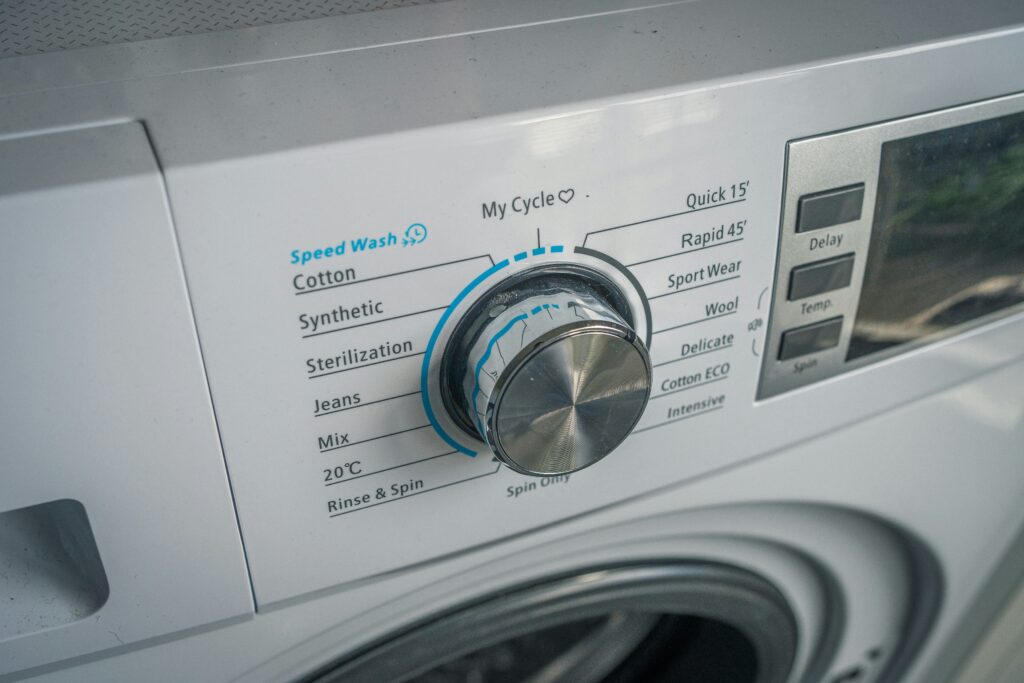
Drum bearings are what allow the washer’s drum to make the rotations necessary for the machine to operate correctly. The bearings, in turn, have a bearing on the washer’s noise profile. If the bearings become worn or damaged, the washer’s drum (or the motor that turns it) may emit a distinct rumbling, grinding, or roaring sound that intensifies the faster the drum spins.
Maytag considers damaged drum bearings a possible culprit for washers that make a noisy clamor when they should be spinning clothes at high speeds. The sound may take the form of grinding, banging, or rumbling.
While damaged bearings are not the most likely explanation for a washer that only shakes violently when washing a heavy blanket, they should be considered if the shaking is frequent and accompanied by unusual noises. To confirm that the bearings are indeed faulty, the machine’s drum should be examined to rule out other causes.
A Practical Way to Diagnose the Problem
“Instead of immediately assuming the worst, troubleshoot your washing machine in a logical order.”
Step 1: Stop and inspect the load
Look for clothing gathered heavily on one side. Redistribute the load and remove excess laundry if the drum is tightly packed.
Step 2: Run an appropriate test
After correcting the load, use a suitable rinse-and-spin or spin cycle according to the manufacturer’s instructions. LG recommends using a light load to test whether excessive vibration remains after leveling and load adjustments.
Step 3: Check whether the machine rocks
With the washer stopped, gently test the cabinet from several directions. If it rocks, adjust the leveling feet according to the owner’s manual.
Step 4: Consider the installation history
If the washer is new or was recently transported, verify that all required shipping materials were removed.
Step 5: Listen to the type of noise
The sound itself can provide useful information.
| What you notice | More likely explanation |
| Shaking only with certain loads | Unbalanced or bulky laundry |
| Washer rocks when pushed | Leveling problem |
| Severe vibration immediately after installation | Shipping bolts or installation issue |
| Banging against wall | Hose or nearby-object contact |
| Persistent rumbling during every spin | Possible bearing or mechanical issue |
| Loud banging in an older machine | Suspension or drum-related problem |
| Vibration that improves after redistributing clothes | Load imbalance |
This is not a definitive diagnosis, but it helps prioritize the simplest explanations before considering internal component failure.
Should You Keep Using a Washing Machine That Shakes Violently?
A small amount of movement due to high-speed spinning is normal, but a washer that constantly walks on the floor, hits hard things, or makes strange noises cannot be left alone.
Maytag says that the movement of the washer is normal, but the unit should not walk on the floor and make a lot of noise and thumping.
The further movement of the apparatus can lead to malfunction and problems with the hose, since, according to LG, intense shaking can damage other parts and affect the connections. If the above methods do not help, stop trying to fix the problem and turn to the service manual or the company’s technical support.
Common Mistakes When Trying to Fix Washer Vibration
The first mistake is trying to replace parts right away without balancing the load. An improperly distributed load can make even a working machine malfunction.
The second error people tend to make is adjusting the legs without making sure that the washer is truly placed on a level surface. It may look level, but it can still rock from side to side.
The third mistake is using vibration pads as a quick fix. They may work in some cases; however, they should only be used if everything else fails and the problem is diagnosed.
The last error is removing the panel to check the mechanism when it is not supposed to be done by the owner. The owners’ manuals state that if the vibration persists after several diagnostic tests, the machine should be taken to a service center. This is because some of the parts can only be accessed when the washer is disassembled.
Front-Load vs. Top-Load Washers

The underlying physics is similar, but the likely troubleshooting points can differ.
Front-load washers commonly use transport bolts to secure the tub during shipping, making installation checks especially important. Their suspension systems are also designed to control movement during high-speed horizontal-axis spinning.
Top-load washers can also become severely unbalanced, particularly when heavy garments or bulky items gather on one side of the basket. GE recommends checking leveling, load distribution, and, on applicable models, the shipping rod.
Therefore, the washer’s design matters. Always use model-specific instructions before adjusting or removing components.
When Professional Repair Makes More Sense
Professional service is appropriate when the washer continues shaking violently after you have:
- Corrected the load.
- Reduced the load size.
- Checked the leveling feet.
- Confirmed the washer is on a stable surface.
- Verified shipping materials were removed.
- Checked for obvious external objects or hose contact.
These symptoms are crucial for professional diagnosis: grinding, roaring, scraping, repetitive heavy bang, obvious loose drum, leaking water and odd behavior. Those are likely indicating a mechanical failure, not merely an imbalance. Maytag specifically advises service for a suspected mechanical issue that requires disassembling the washer, such as worn shock absorbers or a damaged or failing drum bearings.
The repair performed will depend on the design and age of the appliance, warranty status and cost of replacement part.
With an older washing machine it makes sense to compare a repair estimate to the cost of a new appliance and what is left of the old machine’s expected lifespan.
How to Prevent Excessive Washer Vibration
Prevention of the issue is typically easier than finding why a moving appliance is dancing the rhumba already. – Don’t overstuff the machine’s drum – loosely pack your items into the drum and consider separately cleaning exceptionally heavy garments – Don’t overdo it – use bulk settings for bulky items or those with special needs, adhering strictly to manufacturer capacity guidance – – Examine the washing machine’s stable status periodically-even well leveled appliances can shift over time due to floor vibrations or levelling adjustment creep.
– Don’t skip reinstallation on washing machines that moved-even if you didn’t notice the shift during use. – If moving a top loader, revisit manufacturer instructions. It is crucial that transport hardware is back securely in place on those with removable top drawers prior to any move. – Small but quick diagnostics could aid you between correct usage and that moment when you suspect something may soon go awfully wrong! – Bottom line is there-or maybe I should say ‘on the dance floor’ so get ready to give it a go!
Final Analysis
So, why does my washing machine shake violently during spin cycle? An unbalanced load, an overloaded drum, uneven leveling, an uneven floor surface or installation errors like shipping bolts that haven’t been pulled typically form the first tier of suspects, and will often appear at the top of every manufacturer troubleshooting guide. And if redistribution of the laundry and leveling the machine stops the wobbling? Big mechanical repair might be avoided, but persistent wobbling – especially when coupled with grinding or rumbling sounds, a distinctive banging or if the drum is visibly loose – still calls for inspection.
8. FAQs
1. Is it normal for a washing machine to shake during the spin cycle?
Some vibration is normal because the drum is rotating rapidly. However, violent shaking, repeated banging, or a washer that moves across the floor is not considered normal operation and should be investigated.
2. Why does my washing machine shake only with certain loads?
Certain loads are much easier to unbalance. Heavy towels, blankets, rugs, jeans, and waterproof materials can collect on one side of the drum and create an uneven weight distribution during spinning.
3. Can an unlevel washing machine cause violent shaking?
Yes. If the washer is not level or one or more feet are not firmly contacting the floor, vibration can become substantially worse during high-speed spinning.
4. Why is my new washing machine shaking so badly?
If a newly installed washer shakes excessively, check whether its shipping or transport bolts and packing materials were removed. Also verify that the appliance is level and that all feet firmly contact the floor.
5. Can worn shock absorbers cause a washer to shake?
That’s often the case. Most washing machines have shock absorbers and spring-like elements known as suspensions, and when these start to get worn, excess movement can happen – especially if the washing machine is a few years old.
6. Why does my washer make a grinding or roaring sound while spinning?
If there is a continuous grinding, roaring or thumping noise present, this would signify a mechanical fault that could involve the drum bearings being damaged. Internal parts may need to be stripped down as part of diagnosis and it may be beneficial to get an engineer to examine the issue.
7. Should I stop using a washing machine that walks across the floor?
Yes. Washing machines that constantly scoot across the floor should not be operated as such, and instead require diagnosis. Check load and leveling first, and call for professional repair service if the issue persists.
Conclusion
If you are wondering, “Why does my washing machine shake violently during spin cycle?”, the cause is often related to an unbalanced load, an uneven floor, or a problem with the machine’s leveling. Another reason the washer might shake excessively is worn rods, shock absorbers, springs, bearings or inside the washer itself. First, make sure to redistribute the load. Check that the washer is leveled, and that it is far enough from walls or cabinets. If it’s still shaking excessively, or there are funny noises occurring, and is walking the floors or appears damaged internally, discontinue use and seek repairs.