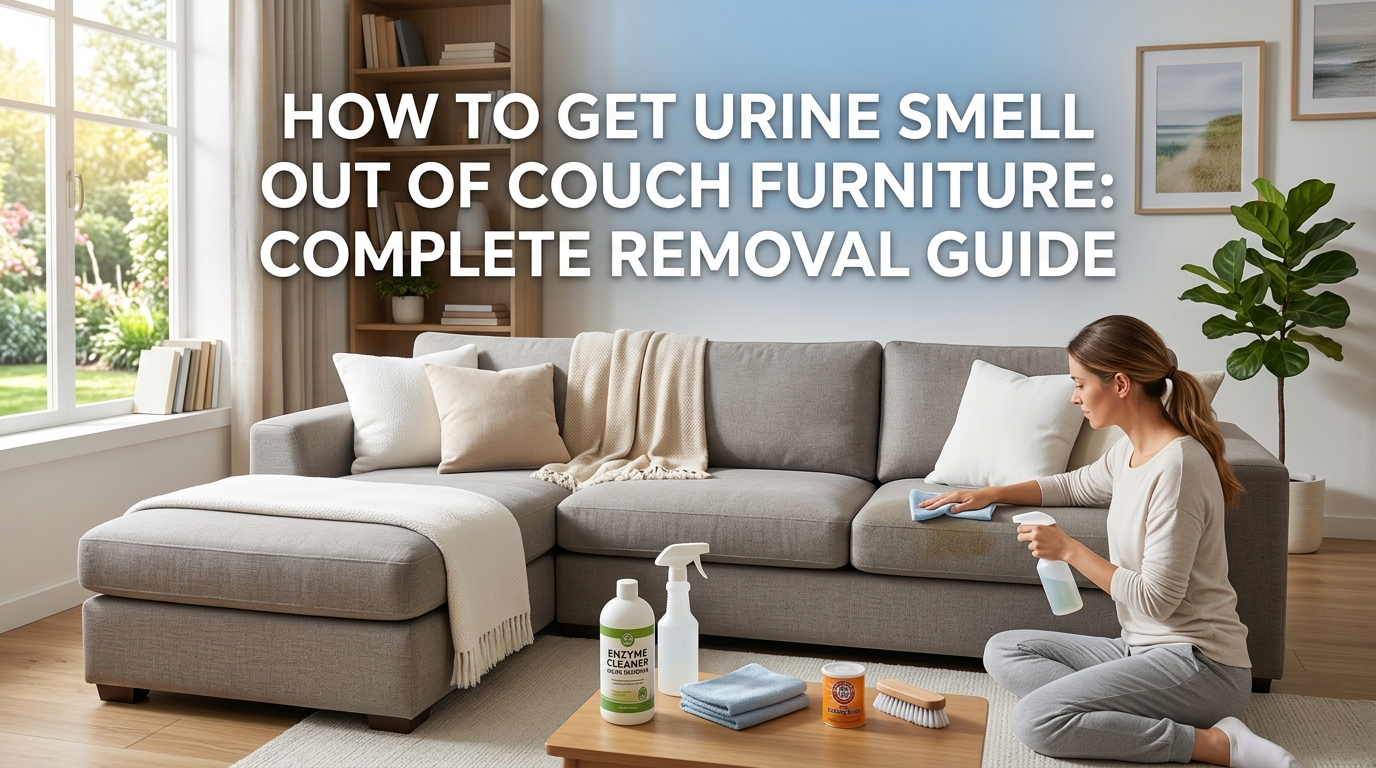
Few household incidents create as much immediate distress as discovering liquid waste soaking directly into living room furniture. Whether caused by a house-training puppy, an aging feline, or a toddler undergoing potty training, understanding how to get urine smell out of couch fabrics requires a strategic approach grounded in chemistry rather than surface masking. Traditional household cleaners often fail because they address only the visible surface wetness while leaving complex organic compounds embedded deep inside high-density foam padding.
The main issue with biological accidents is that their components are subject to chemical interactions during the drying process on the surface of the fabric. Initially, the liquid that has been spilled on the upholstery is highly acidic due to the abundance of urea and protein molecules in it. However, once the solution dries, the bacteria consume the organic matter, and the resulting gas creates an alkaline environment. The gas becomes ammonia, which evaporates, leaving the uric acid salts in the fibers, from where they will be virtually impossible to remove later. This is why the dry spots from pets or humans tend to smell worse weeks or even months after the incident.
The only effective way to remove the odor from biological fluids is to eliminate the salts by utilizing enzymatic cleaners, acid-based solutions, or specialized extractors based on enzymatic odor removal principles. This guide will explain the chemistry behind biological stain removal and go over the appropriate procedures and products to deal with the situation. It will also mention vital aftercare instructions and factors that might prolong the process.
The Chemical Composition of Biological Accidents in Upholstery
To execute an effective strategy for how to get urine smell out of couch cushions, you must first understand why standard multi-surface sprays and air fresheners prove ineffective. Fluid waste consists of urea, urobilin pigments, creatinine, sodium chloride, and various metabolic proteins. During the initial drying stage, water evaporates, leaving behind a concentrated combination of organic residues and chemical salts that settle deep into the cushion core.
As bacteria eat away, the urea in the liquid turns into ammonium carbonate, giving off an unpleasant ammonia odor. After drying, uric acid crystals are formed, which are inert but can absorb water vapor, allowing the salts to off-gas and spread the odor deep inside the carpet. Adding fabric refresher would only mask the upper layer of the fibers, as the uric acid crystals would still be present deep within the foam. To fully desiccate the carpet, neutralizing and eliminating the odor, a cleaning solution is needed that could penetrate the fibers and break down the chemical structure of the uric acid.
Evaluating Upholstery Fabric Codes Before Treatment
Before applying any liquid solution when researching how to get urine smell out of couch materials, you must determine the precise fabric composition of your sofa and follow upholstery cleaning guidelines appropriate for the material. Furniture manufacturers attach care tags, usually located under the main seat cushions or along the bottom frame, stamped with standardized cleaning code letters that dictate safe cleaning methods.
A tag with the code W means that the fabric is water safe and can be treated with water-based enzymatic cleaners, diluted vinegar solutions, or steam cleaners. S code signifies that the fabric can only be treated with water-free solvent cleaners. This type of fabric cannot be exposed to water, as it will shrink, mark, or felt. S/W indicates that the fabric can be treated with both types of solutions mentioned above. A tag with an X code means that the fabric can only be vacuumed or brushed. Specialized dry cleaning restoration methods should be used in case of spots or stains.
Incorrect maintenance of the fabric may result in water rings, dye bleeding, stiffness or pile distortion on fine fabrics such as velvet, microfiber, or suede. Therefore, if the tag on the back of the sofa is lost, it is recommended to test the solvents on a back-seam area first before using them on the entire surface. A few drops of solution may be applied to the test spot and left to dry.
The Role of Enzymatic Bio-Cleaners in Odor Elimination
When considering how to get urine smell out of couch padding, bio-enzymatic cleaners represent the undisputed gold standard for permanent odor destruction. These specialized cleaning formulations contain beneficial bacteria cultures that produce specific natural enzymes designed to digest organic waste products.
Protease enzymes consume complex protein polymers, lipase enzymes dismantle fat lipids, and amylase enzymes break down starch molecules. Most importantly, unique uricase enzymes decompose uric acid crystals into simple water-soluble molecules ingrounded carbon dioxide and water, which escape into the air without any unpleasant odor.
Unlike typical detergents, which remove dirt and grime on a superficial level, enzymatic cleaners need to be left on the surface of the treated material in order to penetrate deep inside its layers. Surfactants in regular detergent solutions take care of the majority of stains by simply lifting them away. Enzymatic spotting agents require some moisture and time to do their job.
As such, you cannot just spot-treat with an enzymatic cleaning solution. You need to apply the product abundantly and let it penetrate the treated material in order to effectively dismantle and eliminate complex organic molecules. Make sure to saturate the cushion foam with the enzymatic solution to the same extent as the liquid got into it.
Step-by-Step Restoration Protocol for Fresh Liquid Spills
Acting quickly when an accident occurs makes the process of how to get urine smell out of couch fabrics significantly easier, as preventing deep cushion saturation reduces overall restoration effort.
Begin by gently pressing clean, white folded paper towels or a dry microfiber cloth directly onto the wet spot to absorb as much free-standing liquid as possible. Apply firm, downward pressure using your hands or stand on the folded towels to draw moisture upward out of the cushion foam. Avoid rubbing or scrubbing in circular motions, as friction forces liquid deeper into adjacent unstained threads and damages delicate fabric fibers.

Once you have extracted the majority of the liquid, saturate the affected zone thoroughly with a high-quality bio-enzymatic cleaner, ensuring the liquid penetrates deep into the inner cushion core. Allow the enzyme solution to dwell undisturbed for at least fifteen to thirty minutes, keeping the area damp so the active bacteria can break down the uric acid salts.
After the recommended dwell time, blot up the excess enzymatic solution using clean, dry towels. Place a heavy object, such as a stack of books wrapped in plastic bags, over a fresh layer of towels placed on top of the treated spot to pull remaining moisture out of the foam overnight. Allow the cushion to air dry naturally in a well-ventilated room, avoiding direct heat sources like hair dryers, which can lock lingering proteins into the fabric.
Treating Dried, Old, or Hard-to-Locate Odor Sources
Finding a solution for how to get urine smell out of couch cushions becomes more challenging when dealing with dried, historical stains that are no longer visually obvious. In many cases, the odor is noticeable in the room, but identifying the exact location on the upholstery requires systematic detection tools.
Using a ultraviolet blacklight in otherwise darkened environment best locates any biological deposits, as these salts glow vivid yellow green or pale white when exposed to such light
Mark the approximate perimeters of each glowing spot with chalk so that they can be easily found and cleaned.
To loosen the dried crystalline deposits, make a cleaning solution of one part distilled white vinegar to two parts warm water.
You should then liberally spray the affected area with this solution to both dissolve the salts and lower the pH of the alkaline deposit. After first rinsing the spot with the vinegar solution, you should liberally apply a bio-enzymatic cleaner and then cover the spot with plastic wrap to keep the solution from quickly evaporating and thus give the enzymes time to break down the reconstituted uric acid deep within the fibres of the fabric.
Alternative Household Solutions and Vinegar Applications
When commercial bio-cleaners are not immediately available, knowing how to get urine smell out of couch materials using common pantry items provides a practical first line of defense. Distilled white vinegar and baking soda work well together through a two-step acid-base neutralization process.
White vinegar neutralizes the alkaline ammonia salts from dried up biological wastes while at the same time acting as a disinfectant. Thoroughly spray the solution on the spot, making sure that the fabric gets adequately moist. Let it stand for 15 minutes, during which the vinegar smell may overpower the stench of the ammonia. Once the liquid has dried, the smell should be almost gone.
Sprinkle the surface of the upholstery with baking soda in an even thick layer and let it stand for about 12 to 24 hours. The remedy will absorb the remaining traces of moisture and odor from the fabric. Finally, remove the baking soda with a vacuum cleaner that has an upholstery attachment.
Comparing Cleaning Methods Across Performance Factors
Selecting the best approach for how to get urine smell out of couch cushions depends on fabric type, stain age, depth of liquid penetration, and equipment availability.
Bio-Enzymatic Cleaners provide the highest overall effectiveness for both fresh and dried accidents on water-safe fabrics. They permanently digest uric acid crystals and require no rinsing, though they need longer dwell times to achieve full results.
Diluted White Vinegar and Baking Soda offer a convenient, low-cost household option suitable for minor surface spills. They excel at neutralizing ammonia gases and absorbing moisture, but struggle to eliminate deeply embedded uric acid crystals inside thick cushion foam.
Submersible Hot Water Extraction units are highly effective for removing large volumes of fluid from water-safe fabrics. They offer deep-cleaning capabilities and rapid fluid extraction, but require renting specialized equipment and carry a risk of over-wetting the foam if handled improperly.
Dry-Cleaning Solvents are mandatory for delicate fabrics labeled with cleaning code S. While they protect water-sensitive fibers from shrinkage and dye bleeding, their ability to break down organic salt crystals is limited compared to water-based enzymatic agents.
Critical Errors That Can Permanently Damage Upholstery
When homeowners frantically search for how to get urine smell out of couch solutions, they often use aggressive cleaning tactics that cause permanent structural damage to their furniture. Avoiding these common mistakes protects your investment and prevents worsening the odor problem.
Never use hot steam cleaners directly on fresh or un-extracted biological stains. High heat denatures the proteins present in biological fluids, cooking them directly into the synthetic or natural fibers of your upholstery and setting the stain and odor permanently into the fabric matrix. Always complete cold-water extraction and enzymatic breakdown before applying any heat-based steam treatments.
Avoid mixing household ammonia with bleach or using ammonia-based glass cleaners on biological deposits. Because urine naturally breaks down into ammonia, applying additional ammonia-based chemicals reinforces the scent markers, signaling to pets that the area is an acceptable territory-marking spot. Furthermore, mixing ammonia with chlorine bleach creates toxic chloramine gas, posing severe respiratory hazards.
Do not over-saturate the cushion foam without providing adequate drying ventilation. Leaving deep foam padding excessively wet for more than forty-eight hours creates an ideal environment for mold and mildew growth inside the sofa frame, resulting in a musty structural odor that is far more difficult to eliminate than the original biological spill.
Professional Extraction Techniques and Cushion Replacement
When self-treatment options fail to yield results, professional restoration techniques offer the final solution for how to get urine smell out of couch furniture. Severe accidents that have soaked through the outer fabric, inner lining, and core foam down to the wooden frame may require specialized equipment or component replacement.
Professional upholstery technicians utilize commercial-grade hot water extractors equipped with specialized subsurface extraction tools. These tools inject water and neutralizing solutions deep into the cushion foam while simultaneously applying high vacuum pressure, pulling deep-seated liquid waste and dissolved salt crystals out of the cushion core without saturating the surrounding frame.
If the urine has penetrated deep into high-density polyurethane foam and remained untreated for months, the internal foam cell structure may be permanently degraded. In such cases, the most cost-effective solution is to unzipper the outer upholstery cover, discard the contaminated interior foam insert, treat the empty outer fabric cover with enzymatic bio-cleaners, and replace the inner cushion with fresh, custom-cut high-density foam.
Preventing Future Accidents and Protecting Furniture
Once you have successfully executed your strategy for how to get urine smell out of couch cushions, implementing proactive prevention measures ensures your furniture remains clean, fresh, and protected against future mishaps with practical furniture stain prevention tips.
Installing a breathable, waterproof upholstery protector beneath your decorative fabric covers provides an invisible barrier against liquid spills. Modern waterproof cushion liners feature soft polyurethane backings that block liquid penetration while allowing air to circulate, keeping the inner foam core completely dry during unexpected accidents.
Applying a fabric protector spray to the outer surface of your sofa creates hydrophobic surface tension, causing liquid spills to bead up on top of the fabric rather than soaking immediately into the weave. This buys you precious time to blot up spills with a paper towel before they penetrate the inner padding.
For households with pets, addressing underlying behavioral drivers or health issues is essential to preventing repeat territory marking. Schedule a veterinary checkup to rule out urinary tract infections or kidney issues in aging pets, and ensure cat litter boxes are cleaned daily and placed in accessible, low-stress locations throughout your home.