How to Get Ants Out of Your Car
Finding ants crawling across the dashboard, seats, or floor mats is more than an annoying surprise. If you’re wondering how to get ants out of your car, the most useful approach is to determine why they entered, remove whatever is attracting them, and deal with the colony rather than simply killing the ants you can see.
Ants are naturally attracted to our vehicles as potential shelter and food sources, especially if your car smells sweet or moist from leftover drinks and snacks. If your car happens to sit or get parked over a nest, foraging ants may simply gain access from there. In such cases where your car becomes home to more than a few ants, consider an integrated pest-management strategy that most professionals advise: find the ants, remove the attractions, clean their trail, and apply spot treatments rather than randomly spraying.
The good news is that in most cases, vehicle ants issues can be dealt with in a structured manner.
Remember, you only see the ants at work- there might be a colony elsewhere in your car’s interior or even in a spot outside your vehicle.
Why Are Ants Getting Into Your Car?
In essence, a vehicle has the same basic appeal for an ant as it does for an insect or any other foraging creature that might venture into a structure, which are essentially food, water, and shelter. A stray french fry crushed underneath a seat, spilled soda dried around a cup holder, leftover food packaging lurking in the trunk of a vehicle, or water seeping under the floorboards will entice ants to explore.
However, where you park can also play a role. If your car is parked directly above an established colony, or directly alongside a traveled ant highway, the colony workers will eventually make their way over the tires, through the car’s engine, and onto the car’s body. The worker may then stumble upon a bounty to take back to the colony; this will be indicated by a chemical trail. This pheromine trail helps more worker ants find this food source and use the same route. Ants are what many drivers perceive as a larger visible line.
Of course, a colony’s presence does not necessarily means that it’s inside your vehicle. In many cases the car has become merely a site used by the colony’s workers to forage.
Which is relevant to the matter of exterminating these ants. Not all ants should be dealt with by means of insecticide application; this should not be applied if the ants’ colony is on the other side of your vehicle.
First, Move the Car
Some of the easiest preventive measures can also be the easiest to skip: move your car. Parking it over an ant nest or next to a heavily trafficked ant highway puts it right in the middle of their travel path. Move it to a clean parking space away from visible signs of ant colonies, nests, areas of dense vegetation with activity and locations where food residue tends to collect.
That won’t get rid of a colony once established in the vehicle itself, but it does reduce a likely cause of reinvasion and provides a cleaner work zone.
As a bonus, if you find they are back right after moving, it tells you something new about the problem (ie, possibly connected to food waste, water, or a nesting situation inside or around the car rather than just the original parking spot).
Clean the Interior Thoroughly
Remove what’s attracting them and follow these car cleaning and care tips to keep the interior clean and less appealing to ants.
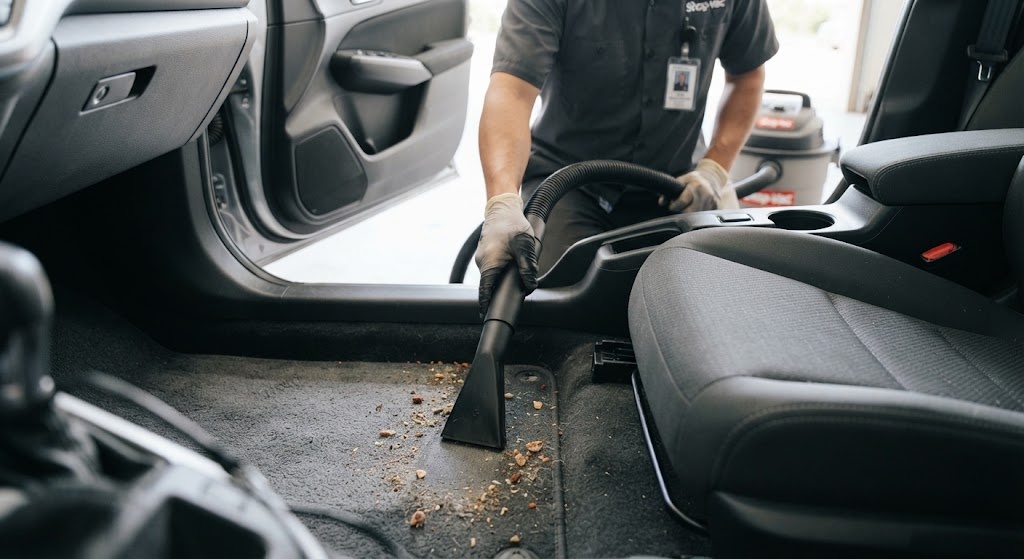
Remove everything from the interior of the vehicle that you possibly can- under the seats, from the pockets of the doors, from cup holders, from the center console and from the glove box, as well as all of the contents of the trunk or cargo area, from beneath removable mats.
Vacuum up the residue, being certain to get into crevices or along seams where tiny food fragments can be easily hidden.
Cleaning goes deeper than seeing. Where there has been a spilled liquid, like sodas, juice, coffee, or sauces, residue can remain and still be attractive even when the spill is not visually evident, making regular car interior cleaning tips especially useful. Guidelines on the University Extension sites stress Sanitation as part of ant control. The idea is that getting rid of the sources of food and water is paramount.
Use a safe all-purpose cleaner for whatever your car interior is made of. Do not try to wet any switchs, stereos, vents or electrical components; and do not oversaturate the area being cleaned.
If there has been a major spill onto fabrics or carpets, vacuuming alone may be insufficient for getting the residue out. A more thorough interior cleaning is often necessary to eradicate what seeped beneath the surface.
Follow the Ant Trail Instead of Guessing
Once the interior is clean, observe where the remaining ants are traveling.
This can provide more information than simply counting how many ants you see.
Look for movement around:
- Door seals and thresholds
- Floor mats and carpeting
- Seat rails
- Center-console gaps
- Dashboard edges
- Trunk and hatch seals
- Areas around wiring or openings
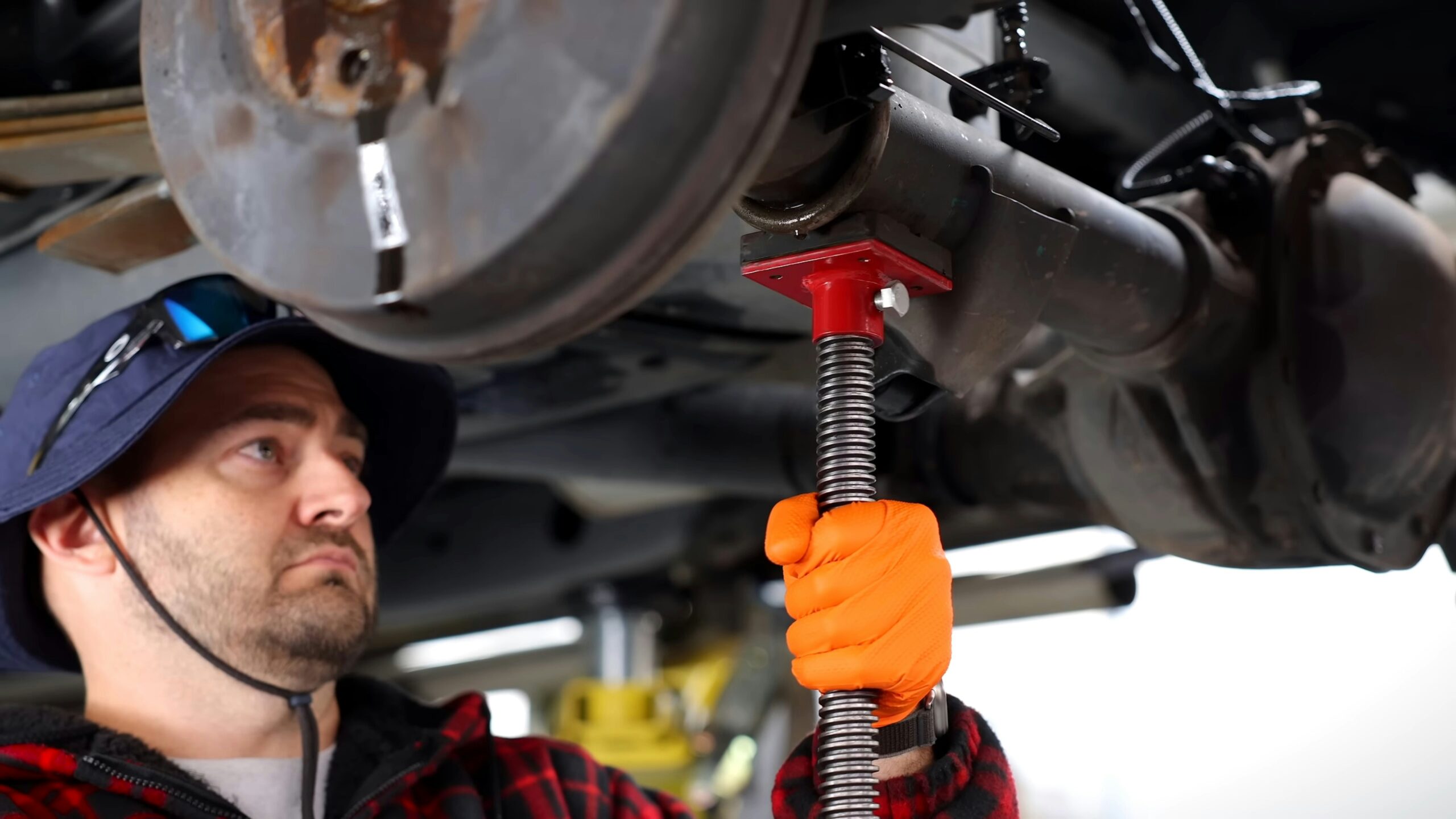
- The engine compartment
This will help decide whether the ants have entered the vehicle from outdoors, are moving from one compartment of the vehicle to another, or congregating near a food or water source.
Part of the reason ants follow a trail to such things is due to chemicals left behind by previous workers, which is why after their food source is removed it helps to wipe the trail to disrupt repeat traffic patterns from others. The National Pest Management Association suggests cleaning ant trails by vacuuming or wiping them down with soap and water, though several extension sources also recommend a vinegar and water mixture to briefly disrupt trails. With the car, however you will want to only use product suitable to the vehicle’s interior.
Check the Engine Bay Carefully
If ants are coming out from under the hood, fenders, or engine, check the engine compartment for possible entry points as well.
Avoid touching or bypassing any hot surfaces, moving parts, bare wires, and other hazards for the time being until the engine has cooled down enough for a thorough inspection.
Check for congregation areas rather than attempting to dismantle the engine compartment in search of nests. It may help to check around the edges and other insulated or otherwise covered areas first.
The appearance of ants in the engine compartment does not necessarily mean there is a nest there.
They may just be passing through, or using the car as a bridge to somewhere else.
If you are having trouble finding nests in otherwise inaccessible electrical or mechanical parts, consider professional inspection and treatment over simply spraying insecticide throughout the engine bay.
Should You Use Ant Bait in a Car?
Ant bait requires more thought than just placing a product on an area where you see ants.
The mechanism of action is different than with a contact spray. Worker ants take bait back to the colony, where the active ingredient in the bait can act on other ants that have not been directly exposed to the pesticide. This makes bait products a good choice for controlling colonies rather than just killing individual workers.
A vehicle is not a home
If you use an ant bait product, the product must be specifically labeled for use in or around vehicles, applied in a manner that will not result in spills or contamination of surfaces, and placed where it will not be accessed by children or pets. Do not attempt to make your own pesticide formulations and do not apply pesticides where they are not labeled to be applied.
More is not always better.
Pesticide application is only one part of an integrated pest management program that includes identification, sanitation, exclusion, and other tactics. University of Minnesota Extension recommends that pesticide applications be made as a last resort after other measures have failed.
Why Spraying Every Ant May Not Solve the Problem
A spray can provide a quick and visible result as any exposed ants will likely die upon exposure due to the fast-acting nature of the solution. However, it is unlikely that a colony will be entirely eliminated through such a method as only a small proportion of foraging ants are present outside the nest at any given time according to the University of Minnesota Extension.
This is especially true for a car where the insects may be entering from an outside colony rather than being inside one.
As such,
a spray can be a largely ineffective method of dealing with ants as it will only kill a minor proportion of the insects present in the vehicle whilst also potentially leaving a residue on the car’s surfaces.
Avoid Bug Bombs and Foggers Inside the Car
Using a home fogger, or “bug bomb,”
is not an advisable first course of action
because vehicles contain many delicate electronic and plastic components that are best not exposed to pesticides, and because fogging does not ensure that pesticides will reach a hidden colony.
The general rule when it comes to pesticides is to use the safest most effective pesticide available, and to use it as directed.
The Pennsylvania state entymology website, Penn State Extension, advises an integrated pest management method, and warns against using unnecessary pesticides.
If a vehicle has an infestation so severe that it requires pesticides to be used in inaccessible places, then a professional exterminator should be consulted.
What About Natural Ant Repellents?
You may find recommendations for using peppermint oil, citrus, cinnamon, vinegar, or other household remedies.
The effectiveness of such methods is primarily conditional, as they usually only repel ants for a short period of time and do not eliminate entire colonies. The University of Minnesota Extension has developed a list of recommendations for controlling ants, noting that many household «remedies» are ineffective.
Therefore, a natural remedy can be used as a preventive measure or as part of a strategy to eliminate a found nest. In addition to regular household cleaning and removing food residues, it is necessary to find and destroy the existing nests and protect the car from new ones.
At the same time, essential oils, concentrated acids, and other substances can harm the interior of the cabin or leave an unpleasant smell.
Can Ants Damage a Car?
Most ants that find their way inside of a vehicle pose no real danger to the vehicle or the people inside of it
However, ants can become a real problem if they take up residence in the car, especially in the vehicle’s electrical system. Different species of ants can present different levels of danger, but some ants are more of a problem than others in certain conditions. Current pest control literature suggests that certain ants are capable of finding their way into the vehicle’s electrical system, and causing damage to it.
This does not mean that every stray ant that wanders into the car is going to ravage the vehicle’s wiring, but some species of ants can be a real menace if they get inside of a vehicle
Signs that there may be ants that are a problem inside of the vehicle include seeing ants around the vehicle’s electrical system, repeated issues with ant infestations, and ants coming out of places that they should not be able to get out of. If these problems occur, it is best to leave the vehicle’s electrical system alone and to have the vehicle checked out.
A Better Way to Prevent Ants From Returning
Once the apparent infestation has been dealt with, prevention measures are equally essential.
Wherever possible, avoid bringing food into the vehicle and remove any spills promptly.
Vacuum the area beneath the seats and around the mats, particularly if there are often meals in the car.
Check the trunk and the places where the items are stored.
Food, bags, pet supplies, and old trash left in the vehicle can attract insects and other unwelcome guests.
In addition, be mindful of where and how you park.
If you have noticed ant trails leading to your vehicle, consider changing your parking spot. There would be fewer ants in the car if there were not so many in the desired parking lot.
[Another thing that could help is to avoid getting the mats wet and follow practical car maintenance tips to reduce conditions that may attract unwanted pests
Condensation or water dripping from the roof might cause the car to have damp spots that attract bugs.
Thus,
it is necessary to take action to make the car inhospitable for the ants rather than trying to make it uninhabitable for them.
When Professional Pest Control Makes Sense

A professional may be warranted when the ants keep returning despite thorough cleaning and relocation.
Professional help is particularly reasonable when:
- Ants repeatedly emerge from inaccessible areas.
- A large number of ants appear throughout the vehicle.
- Activity continues after food and moisture sources have been removed.
- Ants are concentrated around electrical components.
- You cannot determine where they are entering.
- The infestation persists despite appropriate baiting or sanitation.
Correct identification can also be a critical factor because different ant species are likely to react differently to food, bait, nesting sites, and control measures. Extension specialists say that’s why it’s important to identify the species because control methods aren’t necessarily universal.
A professional pest-management technician can check the vehicle plus its surroundings instead of just addressing the insects seen.
Common Mistakes That Make the Problem Worse
One of the biggest mistakes is killing only the ants that are visible. This can create the impression that the infestation has been solved when the colony remains active.
Another mistake is cleaning the seats but ignoring the areas underneath them. Ants are small enough to exploit spaces that are rarely disturbed.
Using too much pesticide is another avoidable problem. More chemical does not necessarily mean better control, particularly when the nest is inaccessible.
Finally, don’t overlook the location where the vehicle is parked. If the car keeps returning to an active ant colony, even a thoroughly cleaned vehicle may experience another invasion.
A Practical Decision Guide
The best response depends on what you find.
| What you observe | Most useful first response |
| A few ants after parking outside | Move the car and inspect for an outdoor trail |
| Ants throughout the cabin | Deep-clean and vacuum the interior |
| Ants concentrated around food residue | Remove the residue and clean the affected area |
| Ants returning after cleaning | Look for an active colony or entry route |
| Ants around the engine bay | Inspect carefully when cool; avoid indiscriminate spraying |
| Persistent activity in inaccessible areas | Consider professional pest management |
| Ants near electrical components | Avoid DIY spraying and arrange an inspection |
This approach is more effective than treating every situation as the same type of infestation.
Final Analysis: What Actually Gets Ants Out of a Car?
The most reliable answer to how to get ants out of your car is not a single spray, household remedy, or quick trick. It is a sequence of actions that addresses both the ants and the reason they were attracted to the vehicle.
First of all, it is essential to move the car away from the ant traffic. Remove the food and other residues and vacuum or wash the inside of the car. It is also necessary to follow the trail to find out where the ants are coming from and clear that area as well, taking care not to ruin the car’s interior. If it is relevant to use bait or another pesticide, you should use only the preparation recommended for such a case and follow the instructions carefully.
Most importantly, it should be borne in mind that the appearance of ants in the car is not a reason to massacre them. It should be noted that ants are social insects, which means that killing the population in the car will do little to prevent their appearance. A more effective and safe solution would be to take steps to exclude them from the car, instead of trying to poison them. This is a more cost-effective and reliable method since it will not be necessary to spend more time and effort on getting rid of the remaining insects in the car.
It is necessary to clarify the situation and find out what the cause of the problem is if, after the described measures, ants continue to appear in the car. In this case, special attention should be paid to finding the nest or the place from which the insects are coming. In this case, the importance of further control and more thorough measures to get rid of the ants increases.
Frequently Asked Questions
1. Why are there ants in my car but no food?
Food is a common attractant, but it is not the only possibility. Ants may have entered because the car was parked near a colony, or they may be seeking moisture or shelter. Inspect both the vehicle and the area where it is normally parked.
2. Will ants leave my car if I move it?
Moving the vehicle can break the ants’ connection to an outdoor trail or colony, but it may not remove ants that have already established activity inside the car. Cleaning and inspection should follow relocation.
3. Can I spray ant killer inside my car?
Do not spray pesticide throughout the cabin unless the product label specifically permits that use. Vehicle interiors contain materials and electronics that can be damaged or contaminated. Targeted, label-compliant treatment is preferable to indiscriminate spraying.
4. How do I get rid of ants in my car naturally?
Begin with nonchemical measures: move the car, remove food and moisture sources, vacuum thoroughly, and clean ant trails with a surface-safe cleaner. Household repellents should not be considered a substitute for colony control.
5. Can ants get into a car’s electrical system?
Some ant species can enter electrical components, and infestations involving wiring deserve attention. However, ordinary ants crawling inside a vehicle do not automatically indicate electrical damage. Persistent activity around electrical areas should be professionally evaluated.
6. Should I use an ant fogger or bug bomb in my car?
A fogger is generally a poor first choice. It can leave pesticide residue throughout the cabin without reliably reaching a concealed colony. If extensive chemical treatment appears necessary, professional pest management is a better option.
7. How can I stop ants from coming back?
Keep the interior free of food debris and sticky spills, address moisture problems, clean regularly, and avoid parking directly over or beside active ant colonies. If ants repeatedly return, identify and address the source rather than repeatedly killing visible workers.
Conclusion
Knowing how to get ants out of your car is only part of the solution. The bigger goal is to remove the food sources, moisture, and hiding places that may be attracting them in the first place. Start by thoroughly cleaning the interior, removing crumbs and spills, checking less obvious areas such as floor mats and storage compartments, and addressing any conditions that could encourage ants to return.
Therefore, if the initial treatment fails to produce the desired result, it is critical to refrain from using a broad range of insecticides in the car. The insects could have built their nests in the unreachable corners, and the toxicants’ mistreatment may lead to dangerous consequences in the enclosed environment. Additionally, if the infestation is complicated, it is necessary to find out the precise species of the intruders and address the peculiarities of their elimination.
After the ants are eliminated, the thorough washing and maintenance of the car are essential to prevent the re-infestation. Thus, the removal of the food sources attractive for the insects will deprive them of the reason to enter the vehicle. Consequently, the prevention measures are even more critical than the elimination process itself.