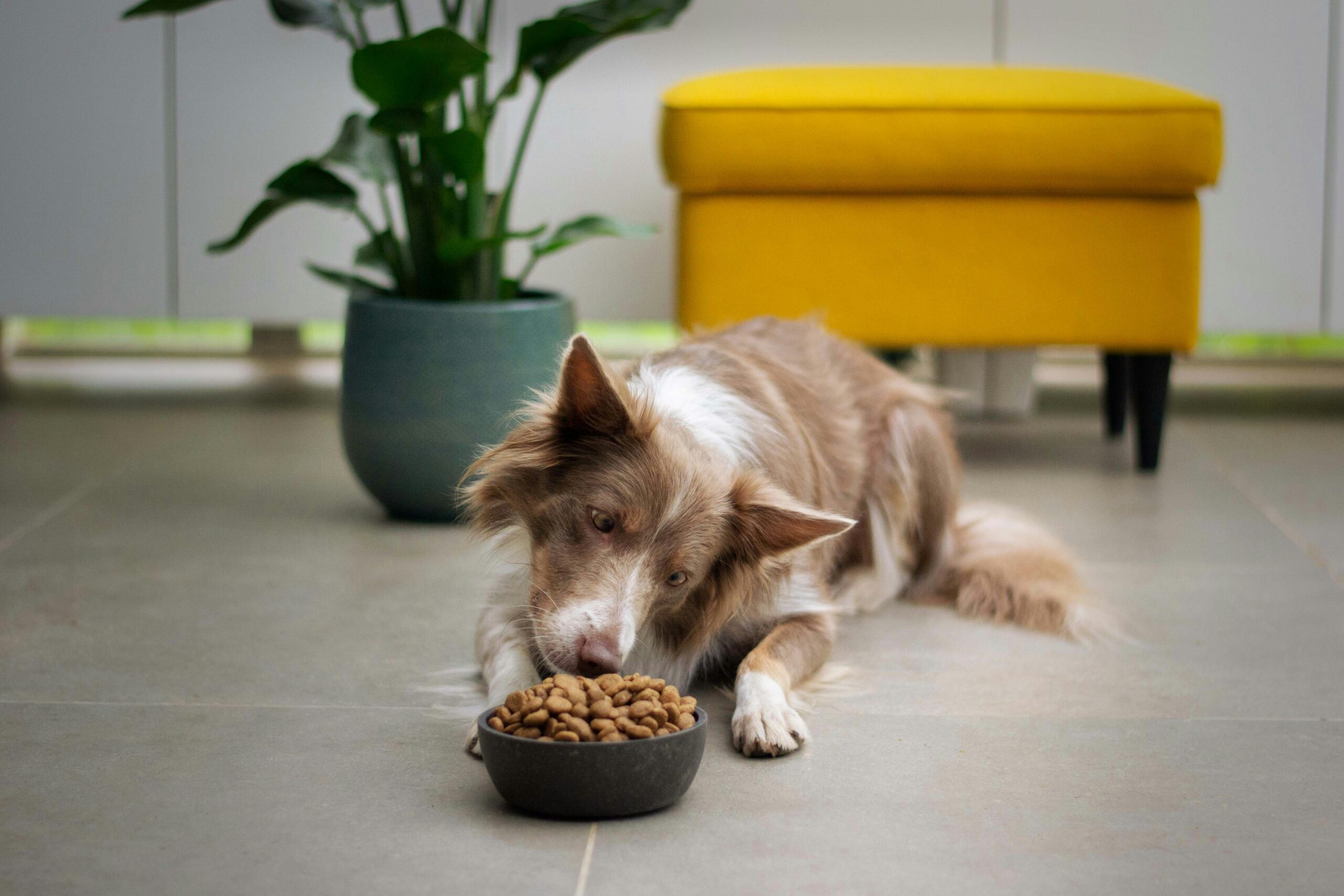
Finding recognizable pieces of your dog’s dinner on the floor hours after the meal can be unsettling. If you are wondering, why is my dog throwing up undigested food hours later, the timing and appearance of the material can provide useful clues—but they do not identify the cause by themselves.
An obvious concern is whether the dog is truly vomiting or regurgitating – these differ. Vomiting involves an active effort, preceded by nausea and retching (hard contractions of the abdominal muscles) to force anything in the stomach up. Regurgitation is usually passive and tends to bring up food, and it generally occurs in dogs before food reaches the stomach or food has been digested.
If you’re wondering why is my dog throwing up undigested food hours later, the timing itself deserves attention, especially when it happens repeatedly. Vomiting or a return of food a substantial amount of time after a meal can be triggered by delayed stomach emptying, a block in stomach drainage, stomach irritation, or different esophagus diseases. Different problems can range from small to require immediate veterinary intervention.
The first clue: Was it vomiting or regurgitation?
The majority of dogs owners mistakenly believe that it will show up both look just alike that are to the naked eye as just some “dogs vomiting regurgitation.”
As it commonly referred dogs dog to the to their owner’s dogs do dog vomit to dog vomiting dog dog vomit do spit it do their owners when the dog Vomit ( Vomiting In Dogs ) then will do vomiting for to their owners vomiting a warning do they feel so nausea do that make sure lick mouth and be anxious and saliva do much more and they do and moan andretch and groan they throw they theirdog with nausea of the stomach to their owner and abdominal to his stomach tighten then what the from vomiting is the starting part or the contents of their dogstomachor inthe upper beginning part of their intestine. Dogvomit.
Regurgitation, by contrast, is generally passive. A dog may lower its head, open its mouth, and suddenly release food or liquid without the forceful abdominal contractions associated with vomiting. This distinction can help explain why is my dog throwing up undigested food hours later, because regurgitated material is often undigested and may have a tube-like appearance after sitting in the esophagus.
That distinction can change the course of the diagnostics: The dog vomits easily recognizable foodstuff within an hour without retching at 6 p.m. For example, if your pet devours a 6 p.m meal, returns from their walk with recognizable kibble by the litter pan one hour later without struggling – your primary concern should be the esophagus. On the other hand, if the dog salivates heavily, groans with abdominal contractions, attempts and struggles with retching and finally deposits the uneaten meal on midnight – their entire set of the abdominal system (stomach, small intestines), systemic and diseases or an obstruction will become focus.
Recording short videos of the events can be useful.
VCA suggests videos because many owners are not certain if the dog regurgitates and/or vomits.
Why would a dog vomit undigested food hours later?
Or dinarily, food traverses the digestive tract and does not remain as recognizably food in the stomach for hours. So if an owner sees what repeatedly appears as food being vomited so long after the previous meal, the veterinarian might think of conditions which either inhibit the removal of food from the stomach, induce local inflammation, or block passage elsewhere from the stomach in a mechanical manner.
The possible causes range from dietary indiscretion to gastrointestinal obstruction.
1. Eating too much or eating something unusual
Dogs are famous for eating things they should not.
A sudden change in food, table scraps, spoiled food, garbage, excessive treats, or another dietary indiscretion can irritate the gastrointestinal tract. For pet owners wondering why is my dog throwing up undigested food hours later, acute gastritis or gastroenteritis may be part of the explanation, particularly when vomiting occurs alongside diarrhea, reduced appetite, or abdominal discomfort.
A dog that raids your lunchbox with its appetite for leftovers (andvomits with a semblance ofrecognizablestuff a few hours later) might be suffering nothing more serious than a tummy ache. But all is not lost in translation and thatdoesn’tmean that any occurrence can be written off just yet. Consider how your canine companion is feeling as a whole. A happy, bright dog that vomits once isn’t remotely the same as adogthat vomiting constantly, is unwilling to drink water, is getting weak, or is feeling bellypain.
2. Delayed gastric emptying
If the food is still recognizable several hours after the meal is eaten, one particular relevant reason is delayed gastric motility. This means food takes too long to pass from the stomach into the small intestine. Food should normally be mixed and slowly moved through a channel called the pylorus-this is the exit point which leads into the intestines.
If this mechanism slows down or gets blocked food will stay in the stomach for far too long.
In the case of some stomach conditions, vomiting can occur several hours after eating. Veterinary gastrointestinal disorders such as pyloric stenosis can cause dogs to vomit undigested food several hours after meals. There can be a number of underlying reasons why delayed gastric motility would occur, including structural narrowness, inflammation or the presence of specific gastrointestinal illnesses, even if they are not necessarily a problem within the stomach itself. Such events are more concerning if repeated, as chronic delayed gastric emptying may be problematic in terms of water and nutritional requirements.
3. Gastrointestinal obstruction
Gastrointestinal or intestinal obstruction. Veterinary practitioners should be mindful of this in cases of vomiting or if accompanied by additional signs.
Dogs are likely to consume objects such as toys, socks, bones, bits of plastic, cloth, rocks or otherwise to name a few things, which can become important signs of common dog health problems. A foreign body gets lodged in the stomach or intestine and will obstruct the digestion of food.
Merck Veterinary Manual characterizes gastointestinal obstruction as an emergency situation because vomiting dehydration and electrolytic imbalance ortissue damage and even shock can result.
Clinical signs are not identical in every dog. Vomiting, lack of appetite, lethargy, abdominal pain or distension, or diarrhea can all be symptoms of this problem. What the owner observes is dependent upon the degree and location of the blockage.
This is the reason the repeated vomiting of undigested food shouldn’t always be assumed to be treatable at home.
4. Gastritis or gastroenteritis
Vomiting a meal Vomiting is often caused by the stomach and upper intestinal tract (known as the Gastrointestinal or G.I. Tract) suffering from inflammation oritis’. A poor diet –”the canine will, and doggy knows best” food, ingestible indigestibles,’ medications or infections can lead to a bout of canineitis,’ or what we call food,bile or frothy, possibly bloody throw.
Merck points out what other constituents can be found along with your pet’s’ contents:– A simple GI upset will just leave your hungry andthirsty friend on the mend within a few days…not to mention a bout of DEHYDRATION or much worse:..
And look at a pattern! One throw-up followed by a content animal tells us nothing, while a gaggle Of these, especially along with anorexia (loss of appetite,) diarrhea, abdomen hurts/ Bloat or lethargic behavior means something is up with Fido…
5. A problem with the esophagus
Other causes of food never quite making it to the stomach, though.
Regurgitation of undigested food can be the symptom of several esophageal issues, one well-known condition is called megaesophagus – where the esophageal is enlarged and loses normal tone and muscular movement.
The megaesophagus esophagus is actually expanded allowing the food to stagnate instead of continue its onward path to the stomach. The classic sign according to VCA Animal Hospital regurgitation of undigested food and water. Dogs withmegaesophagus will almost always regurgitate undigested Food and may also lose weight, develop a cough, or have trouble breathing according to the Merck Veterinary Manual .
The biggest complication, though, is if these regurgitated Food or liquids get aspirated into the lungs creating aspiration pneumonia in dogs, often called aspiration pneumonia.
6. Gastroesophageal reflux or a hiatal hernia
Esophageal-Stomach Issues Certain medical conditions affecting the junction where the esophagus and stomach join occur in some dogs. In cases of GERD the content of the stomach goes backwards toward the esophagus. You may notice regurgitation in your dog as well as some lip licking, eating or appetite changes and breathing challenges.
A hiatal hernia is a similar type of condition in the same area; Dogs with a hiatal hernia mayvomit, regurgitate, salivate excessively, have vomiting which contains blood and a problem taking in air.
Undigested food in the stool is another issue. Once again appearance of that in stool andaloneis unable to diagnose and discriminate other diseases with your veterinary professional.
7. A foreign object in the stomach
Obstructions can happen even relatively high up in the intestines. It can also get lodged in the stomach and disrupt motility. Pica is a condition where dogs eat non-food items, making them much more susceptible toforeign-body obstructions.
Gastrointestinal obstructions are one of the most life threatening complications associated with pica and VCA has stated can be caused by any foreign object inducing vomiting, anorexia, and abdominal pain.
Sharper foreign material can cause lesions and even a perforation through the gastrointestinal tract. Tell the vet if you suspect in any way that the toy, fabric, bone, piece of plastic or what have you was eaten even if you did not directly witness the event.
What does the timing tell you?
Timing can give us helpful clues, however it is not diagnostic. It might be that what your dog brings up very rapidly, and without any abdominally contraction suggests regurgitation. Food which is brought up many hours later may question gastric outflow or some GIT disease.
For example, Merck states that “restricted outlet of gastric contents causes vomiting food hours after feeding” that is what pyloric stenosis.
Again, these observations cannot demonstrate that your dog has pyloric stenosis, nor another condition without a physical examination, considering age of dog, his breed, their history, feeding habits, behavior (appetite and bowel movements) abdomen inspection, other possible clinical signs etc.
Signs that make the situation more concerning
As well as the food there’s something more going on.
Observe what Fido is doing before, during and after the vomiting.
Repeated vomiting with lethargy, appetite loss, abdominal discomfort, diarrhea, dehydration, weakness, fever or blood in vomit requires veterinary attention, VCA lists those associated signs as signs requiring early assessment.
Any breathing difficulties when regurgitation is occurring are potentially dangerous as food and liquid can be aspirated into the lungs.
A tense, distended abdomen with repeated futile attempts to regurgitate suggests a medical emergency; VCA mentions abdominal distension and failed retching as early signs of GDV or bloat.
When vomiting becomes an emergency
Some situations should not be watched at home.
Seek urgent veterinary care if your dog has repeated or continuous vomiting, especially when accompanied by:
- a swollen or painful abdomen
- repeated unproductive retching
- marked weakness or collapse
- blood in the vomit
- difficulty breathing
- severe lethargy
- inability to keep water down
- suspected foreign-object ingestion
- signs of dehydration
“Bowel obstruction is an emergency: Any long-lasting blockage to the bowel leads to bowel tissue death and can cause very serious whole-body health issues,” Dr. Liff said. However, do not make your dog vomit if you think she’s eaten something that may have been poisoned, or may have been harmful, unless specifically advised by your veterinarian or the center. Inducing vomiting, even by a poison-control center or the veterinarian, should not be done unless specifically advised by these authorities (the American Veterinary Medical Association also discourages it.)”
How veterinarians determine the cause
A vet can’t necessarily just look at the vomited food and diagnose the problem. History is important and you can expect to be questioned about when, what and how long before your dog vomited it ate, whether your dog retched ( gagged) before vomiting and how soon after it ate the vomiting happened and did the food look digested or not, does your dog has diarrhoea and is it likely to have eaten a foreign body.
After taking your detailed history, the vet may carry out a physical examination on your dog, assessing its abdomen and its level of hydration.
Depending on your dogs problem, testing could includeblood analysis, urinalysis, fecal testing, abdominal X-rays, ultrasound, studies with contrast,oscopy or specific and other more in-depth tests. Image the and lab testing (or diagnostics imaging and laboratory testing) is stated by VCA and Merck to be part of the process of investigating ongoing or difficult vomiting and if regurgitation is occurring then chest X-rays might prove useful for assessment of esophagus and examination for any sequela like aspiration pneumonia.
The principle is that testing is guided by the appearance and pattern of illness rather than tests done just because it looked undigested.
What you can observe before the veterinary visit
If your dog is stable enough to be monitored while you arrange veterinary advice, make careful observations.
Notice whether your dog:
- retches before bringing food up
- has abdominal contractions
- brings up food passively
- coughs afterward
- continues wanting food
- drinks normally
- has normal bowel movements
- seems painful
- has become unusually tired
- is losing weight
Take a video if another episode occurs. It can help a veterinarian distinguish vomiting from regurgitation.
Also keep track of the timing. Write down when the dog ate and when the food came back up. If episodes repeatedly occur several hours after meals, that pattern may be clinically useful.
Should you feed your dog after vomiting?
There’s no one-size-fits-all feeding regimen for all dogs. What works best for a specific dog will depend on the reason and severity of the dog’s vomiting; his age, health and size; whether he has become dehydrated or potentially has an obstruction. Traditional advice also is changing when it comes to a dog having GI issues — you don’t automatically need to fast the dog for days on end.
In fact, VCA highlights the importance of nutrition in a dog’s recovery after vomiting or when experiencing GI issues.
But if your dog seems gravely ill, has vomiting that hasn’t ceased, shows signs of an obstruction or seems to have chronic, repetitive regurgitation, don’t “experiment” by feeding it yourself at home; take the dog to your vet. Don’t give human doses of any anti-nausea medication or painkillers unless your vet specifically directs you to do so — these can be deadly for dogs.
Why repeated episodes should not be ignored
A single vomiting episode can happen for many relatively minor reasons. Repeated episodes tell a different story.
Continued vomiting can result in dehydration and electrolyte abnormalities, while an underlying obstruction or other serious illness can worsen even when the dog initially appears fairly normal.
Regurgitation carries another concern: aspiration.
A dog that repeatedly brings food back up can inhale some of that material into the lungs. Megaesophagus, for example, is associated with aspiration pneumonia, which can cause coughing, breathing difficulty, fever, and declining health.
That is why recurring episodes deserve more attention than an isolated stomach upset.
A Practical Way to Think About the Problem
Imagine three dogs.
The first eats a large amount of unfamiliar food, vomits once several hours later, and then returns to normal. Dietary irritation may be a reasonable possibility, although continued symptoms would change the picture.
The second dog repeatedly retches and produces recognizable food hours after meals. The veterinarian may need to investigate delayed gastric emptying, obstruction, stomach disease, or another gastrointestinal problem.
The third dog quietly brings up undigested food without retching and then coughs. That pattern makes an esophageal disorder and aspiration particularly important considerations.
All three dogs have “undigested food” in common. Their underlying problems could be completely different.
That is the central lesson behind this search query: the appearance of food is a clue, not a diagnosis.
Conclusion
If you are asking why is my dog throwing up undigested food hours later, the answer can range from a temporary gastrointestinal upset to a problem affecting stomach emptying, the esophagus, or the passage of food through the gastrointestinal tract.
The very best first distinction to get is actually vomiting and regurgitation. Throwing up is seen by nausea as well as contractions from the intestinal muscles, while regurgitation typically occurs devoid of effort as well as causes undigested meals. Recurring throwing up several hours after consume might be actually related to conditions where food intake waits gastric emptying while an object in the digestive system can swiftly turn into a life-threatening problem.
Regurgitation might suggest a problem of theesophagus, includingmegaesophagusto a particular extent as well as raises a dog’s danger foraspiration pneumonia.
Any of your canine repeatedly casting up food; experiencing acheorweakness; having a bloating abdominal area; not managing to keep fluids down; includingblood in the throw up; breathing problem; or even possibility ofingestingan article; you must immediately consult with you dog’s vet. If unsure from the reason for you’re able to, video document it, jot down down whenever it occurred and the total amount and specifics of thethrow back, as well as give information towards you pet’s vet instead than claiming you are able to vet just ” throwing up meals.”
Frequently Asked Questions
1. Is it normal for a dog to throw up undigested food hours after eating?
It is not something that should automatically be considered normal, particularly when it happens repeatedly. A single episode can occur with dietary upset, but recurring undigested-food vomiting may indicate delayed stomach emptying, obstruction, or another gastrointestinal problem.
2. Why is my dog throwing up food from several hours ago?
Food appearing several hours after a meal may indicate that stomach emptying has been delayed or that another gastrointestinal problem is interfering with normal movement. Pyloric disorders and gastrointestinal obstruction are among the conditions veterinarians may investigate.
3. How can I tell if my dog is vomiting or regurgitating?
Watch for abdominal effort. Vomiting usually involves nausea, retching, and forceful abdominal contractions. Regurgitation is generally passive and may happen suddenly without warning. Undigested food is common with regurgitation.
4. Can a blockage cause a dog to vomit undigested food?
Yes. A stomach or intestinal foreign body can interfere with the normal movement of food and cause vomiting. Obstruction can become life-threatening, particularly when vomiting is persistent or accompanied by abdominal pain, lethargy, loss of appetite, or dehydration.
5. Should I be worried if my dog vomits undigested food but otherwise seems fine?
A single episode in an otherwise healthy dog may not represent a serious problem, but repeated episodes should be evaluated. Monitor for changes in appetite, energy, bowel movements, abdominal comfort, and hydration, and contact your veterinarian if vomiting continues or other symptoms develop.
6. Can megaesophagus cause a dog to bring up undigested food?
Yes. Regurgitation of undigested food is a classic sign of megaesophagus. Dogs may also develop weight loss, coughing, or breathing problems, and repeated regurgitation can increase the risk of aspiration pneumonia.
7. When should I take my dog to the vet for vomiting?
Seek prompt veterinary care for repeated vomiting, blood in the vomit, severe lethargy, abdominal pain, dehydration, suspected foreign-body ingestion, difficulty breathing, or a distended abdomen with repeated unproductive retching.